Contact us
Send Us Your Case Details
We’ll respond and let you know the best way to proceed with your case.


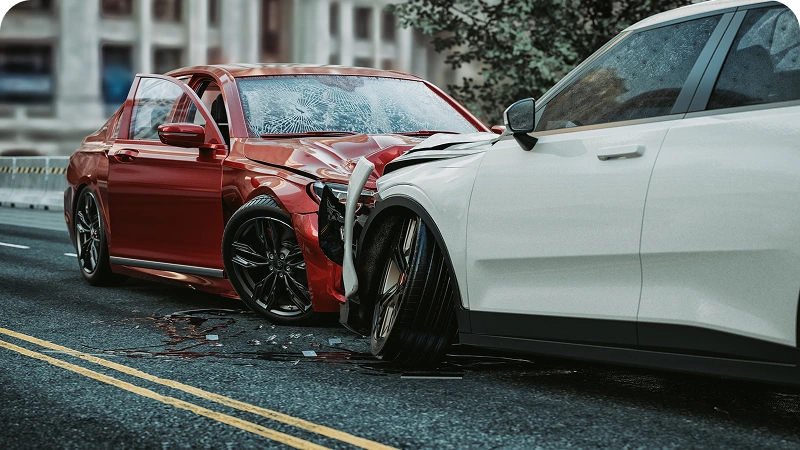
In a Montana rear-end collision, the driver who strikes the vehicle ahead is often closely scrutinized, but fault is not automatic. The evidence must show how the crash happened, whether either driver failed to use reasonable care, and whether any conduct contributed to the injuries or property damage.
Montana law requires drivers to leave a reasonable and prudent following distance, considering speed, traffic, and road conditions. A rear impact may indicate following too closely or traveling too fast, but the point of impact alone does not decide liability. The drivers’ actions, visibility, and road surface also matter. See the Montana Code Annotated, including sections 61-8-303 and 61-8-329.
A sudden stop does not automatically make the front driver responsible. The reason for the stop, whether brake lights or other signals were used, the distance between vehicles, and how much time the following driver had to react may all be important. A driver must account for conditions such as congestion, limited visibility, rain, snow, ice, gravel, or a steep grade when choosing speed and following distance.
Montana’s following-distance statute focuses on what is reasonable and prudent under the speed, traffic, and roadway conditions. The state’s speed law also requires a careful and prudent speed under existing conditions, even when a driver is below the posted limit. These standards make the specific circumstances more important than a simple assumption that one driver is always at fault.
More than one person may contribute to a crash. Under Montana’s comparative-fault rule, an injured person’s fault does not bar recovery if it is not greater than the defendant’s or the combined fault of defendants and nonparties. Any damages are reduced in proportion to the injured person’s share. The allocation depends on the evidence and applicable law. See Montana Code Annotated section 27-1-702.
Damage location, depth, and pattern may help investigators assess where the vehicles were positioned and how they moved on impact. Photos of all vehicles, their final positions, debris, skid marks, and the surrounding roadway can preserve details that may disappear after the scene is cleared. Vehicle damage is only one piece of evidence; it does not establish speed, fault, or injury by itself.
Independent witnesses may help explain traffic conditions, signals, sudden stops, or what each driver did before impact. Nearby business cameras, traffic cameras, dashcams, and vehicle event data may also help reconstruct the collision. Keep the original files when possible, note where they came from, and ask promptly about preservation because some recordings are automatically overwritten.
First, move to a safe location if you can do so without creating another hazard, and call 911 if someone is injured or there is an immediate safety concern. Follow directions from emergency responders. Exchange contact, insurance, and vehicle information with the other driver, and avoid arguing about fault at the scene.
If it is safe, photograph vehicle positions, damage, road conditions, signs, and visible injuries. Get the names and contact information of witnesses. Write down what you remember as soon as practical, including the time, location, weather, direction of travel, and sequence of events. Montana’s driving resources and Judicial Branch website provide state information; for case-specific questions, check the applicable rules or speak with counsel.
Save photographs, repair estimates, towing and rental receipts, medical records, witness details, the crash report, and all communications with insurers. Keep original dashcam or surveillance footage and back it up in more than one place. If a vehicle may contain useful electronic data, ask about preserving it before repairs or disposal. Do not assume that an insurer, repair shop, or another driver will keep every record for you.
Organizing records can clarify what happened and how the collision affected you. Our common injury claims resource discusses documentation, while this premises liability resource explains evidence in another kind of injury claim.
Some symptoms appear after a person leaves the scene. If concerned, seek medical care, explain how the crash occurred, follow the provider’s instructions, and keep records of treatment and related expenses.
Medical records can help document symptom timing and recommended care. Describe prior conditions and later changes accurately; a medical provider should address diagnosis and treatment.
Notify your insurer as your policy requires and keep copies of forms and communications. Be truthful, stick to what you know, and do not guess about speed, distance, or injuries.
Before signing a release or accepting a settlement, read what it covers and consider whether you understand the effect on property-damage and injury claims. Coverage, deadlines, and payment obligations depend on the policy and circumstances. For practical information about working with counsel, see our guide to how to know if you need a personal injury lawyer and our article about the cost of hiring an attorney.
At Wall, McLean & Gallagher, we help people injured in motor vehicle collisions understand the claims process and evaluate the evidence related to a crash. Our team can review records, discuss possible sources of insurance coverage, and explain options based on the facts of an individual matter. We do not promise a particular outcome.
To learn about our Montana attorneys and how we approach injury matters, or to book a consultation, contact our team at (406) 442-1054.
These general answers address common questions after a Montana rear-end crash. A particular claim may depend on details that are not covered here.
The rear driver may be found at fault if the evidence shows they followed too closely, drove too fast for the conditions, or otherwise failed to use reasonable care. Fault is not decided by impact location alone, and more than one person may share responsibility. Preserve evidence, address safety and medical needs, and document insurance communications.
Useful information may include scene and vehicle photographs, witness statements, video, the crash report, road and weather conditions, vehicle data, and medical records. These records can help clarify what happened and how any injuries relate to the collision. No single item necessarily resolves fault.
Consider seeking legal guidance if you were injured, fault is disputed, an insurer asks you to sign a release, or the claim involves multiple drivers or complex evidence. An attorney can assess the specific facts and applicable deadlines. Do not rely on a general article to calculate a filing deadline.